 La Roquette
 Renovating with natural materials: stone, wood, tadelakt and lime
March 2025 · 5 min read
Renovating a stone house from 1850 is a responsibility. You cannot do just anything with a building that has crossed the centuries. At La Roquette, we wanted a renovation that respects the original constructive logic while bringing daily comfort and poetry.
Why natural materials?
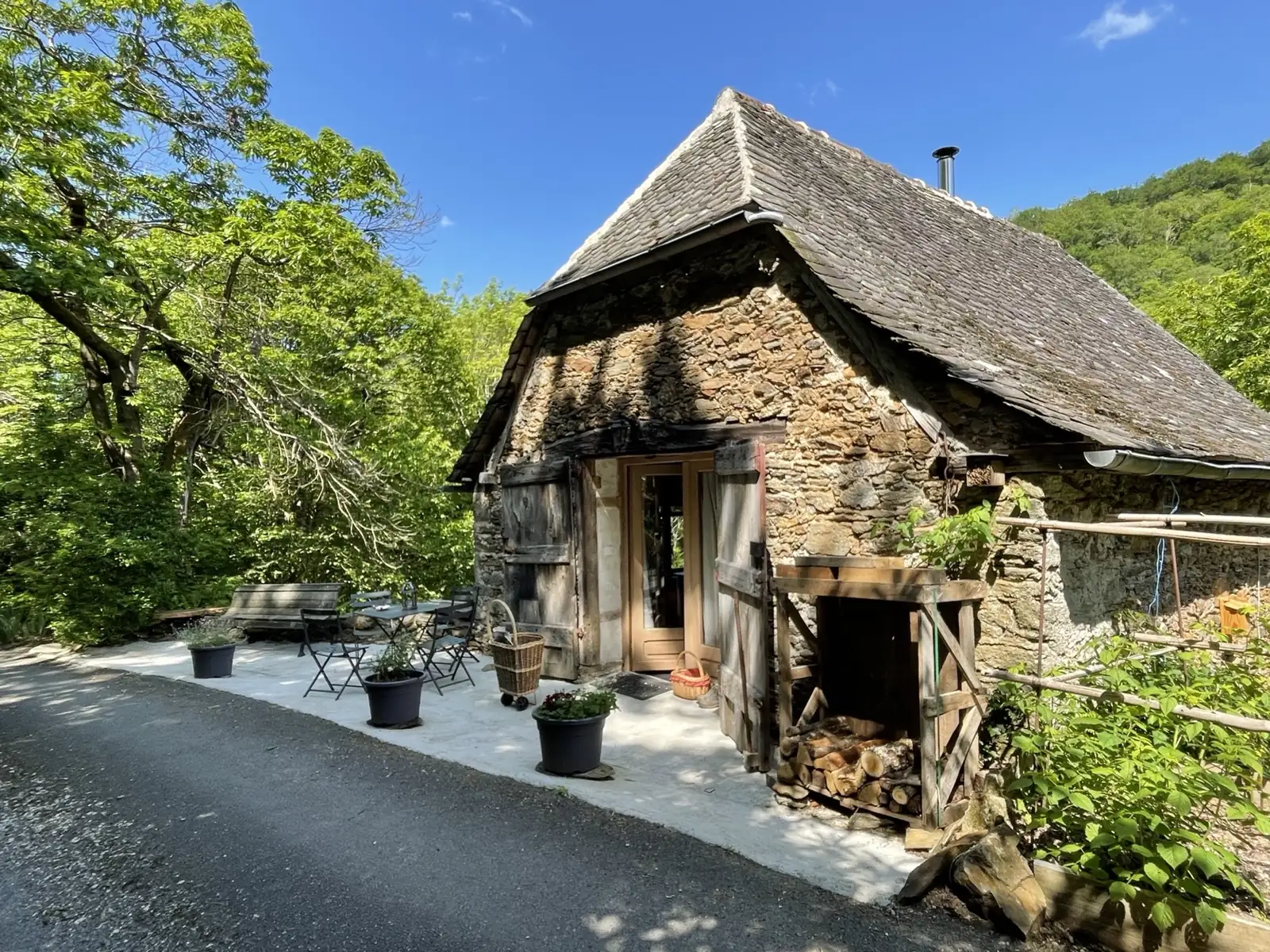
The house and barn at La Roquette were built in local schist stone in the 1850s. These materials have survived 170 years — that is not by chance. Stone breathes, regulates humidity, stores heat during the day and releases it at night. It is in perfect harmony with the Aveyron climate. The classic mistake in old-building renovations is to encase these walls in modern impermeable materials (cement, resins): water vapour is blocked, the walls become damp, and pathologies accumulate.
We therefore made the opposite choice: working with the breathing of the stone, using materials that are permeable to water vapour and compatible with old construction. This is the condition for a renovation that lasts over time.
Local stone: the foundation of everything
All masonry repairs and reconstructions were carried out using local stone, quarried in Aveyron. The joints were repointed with natural hydraulic lime — the only compatible binder for old masonry. Portland cement, too rigid and too impermeable, is prohibited on old stone walls: it creates mechanical stresses that crack the stone and traps moisture. Lime, by contrast, remains flexible, breathable, and naturally bactericidal.
The raw stone floors were retained on the ground floor wherever possible. The natural coolness they provide in summer is priceless, with no air-conditioning system required.
Tadelakt: the Moroccan plaster in the bathrooms
Tadelakt is an ancestral plaster from Morocco, made from Marrakech lime and burnished with a river stone, then treated with black soap. Naturally waterproof thanks to the chemical reaction between the lime and the soap, it is ideal for bathrooms and showers. Its smooth, slightly lustrous surface gives it a beauty that is minimalist and warm at the same time.
We called on a specialist craftsman for the tadelakt work at La Roquette. The application is lengthy and demanding — allow several days for a small bathroom — but the result is a durability and beauty that justify the investment. Our guests have unanimously noticed it and often asked how to reproduce it at home.
Lime render: walls that breathe
The interior walls were rendered with air lime, tinted throughout with natural mineral pigments. The warm tones — ochre, sand, off-white — harmonise with the raw stone left exposed in places. These lime renders naturally regulate the indoor humidity level: they absorb excess moisture and release it when the air dries out. The result is a soft, healthy interior atmosphere, very different from modern houses insulated with mineral wool.
Lime also has a natural antiseptic property: lime-rendered walls do not accumulate mould. A quality particularly appreciated in wet rooms.
Chestnut wood: from the forest to the house
For joinery, staircases and flooring, we chose chestnut wood from sustainably managed Aveyron forests. Chestnut is a hard wood, resistant to moisture — wine growers and coopers have used it for centuries for this reason. It also has the advantage of being abundant locally, which considerably reduces the carbon footprint of supply. Some existing beams were simply stripped and oiled — they are over 150 years old and in perfect condition.
This choice of natural materials is not purely a matter of aesthetics or ethics. It is also a way of giving the building longevity, of respecting what the builders of 1850 put in place, and of in turn passing on a living heritage. To discover the spaces thus created, see our accommodation page.