 La Roquette
 Chestnut trees in Aveyron: forest, fruit and traditions
September 2025 · 5 min read
Across the 7 hectares of La Roquette, the century-old chestnut forest is one of the finest in northern Aveyron. This mythical tree, long known as the "bread tree" of the peasantry, still shapes the landscape and identity of the region.
The chestnut tree: nourisher of Aveyron
For centuries, the chestnut tree was the dietary staple for rural populations across the Massif central. Its flour replaced wheat in regions where acidic, steep soils prevented large-scale cereal cultivation. It was made into bread, polenta and thick soups. Dried and milled chestnut was the fuel that saw people through harsh winters and famines. In Aveyron, people still say the chestnut tree "clothes, feeds and warms" — its wood serving for construction, furniture and firewood alike.
The varieties cultivated here since the Middle Ages are numerous. Some trees in our forest are over two hundred years old: their knotted, sometimes hollow trunks are vegetable monuments in their own right.
Exceptional biodiversity beneath the chestnuts
A chestnut grove is not a dreary monoculture. It is a rich, complex ecosystem. The thick leaf litter hosts dozens of species of fungi, including ceps, chanterelles and milkcaps that punctuate damp autumns. Greater spotted woodpeckers and black woodpeckers hollow out their nests in old trunks. Roe deer browse on young shoots, hedgehogs search for insects, foxes hunt field voles.
Beneath the dense canopy, a specific flora has adapted: bilberries, bracken ferns, mosses and lichens carpet the ground in shades of green. In autumn, the colours of the chestnut forest are spectacular — from straw yellow to coppery brown — and they make for one of the finest walking experiences you can have around La Roquette.
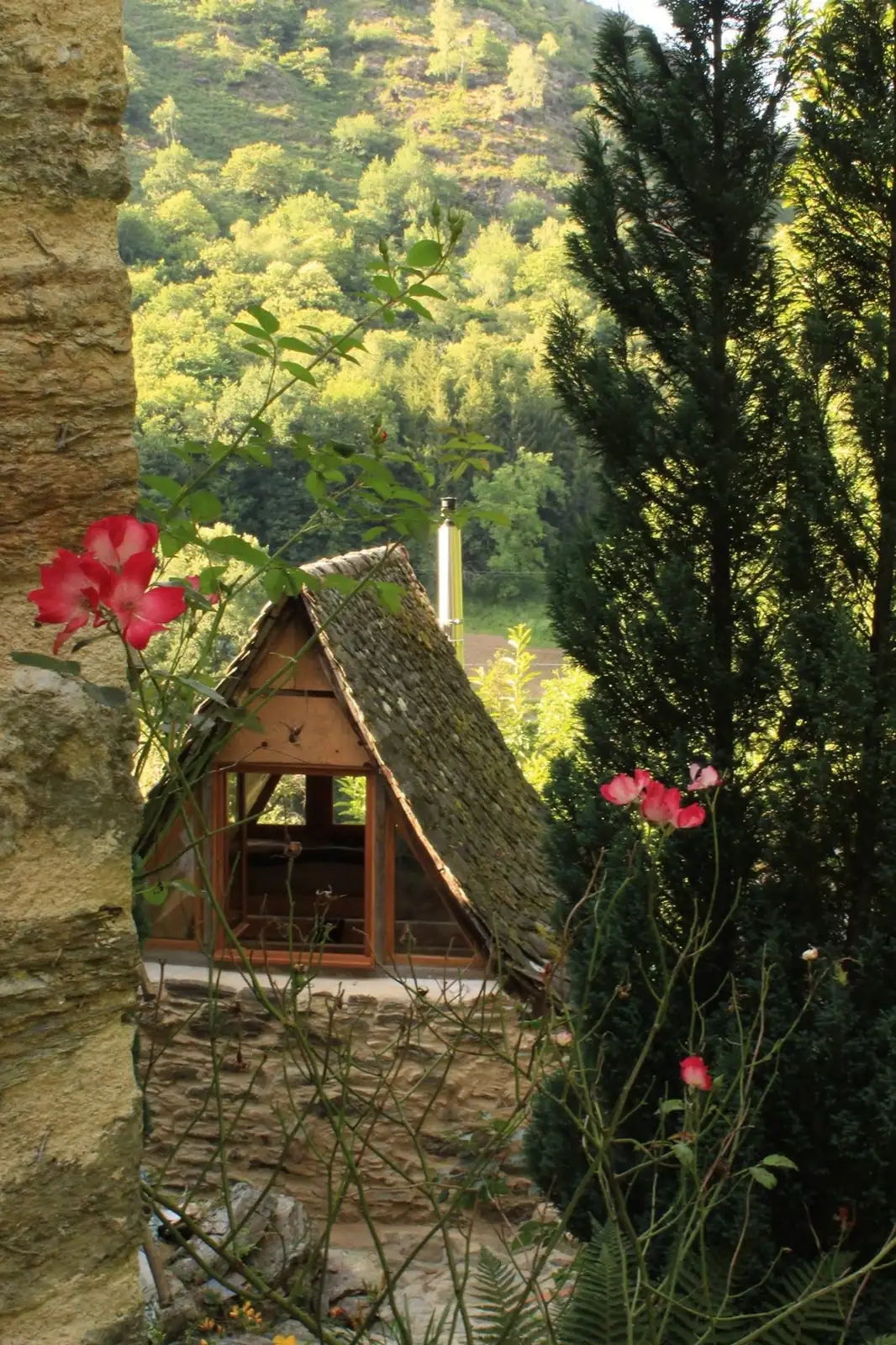
The Secadou: La Roquette's former chestnut drying house
At the heart of our estate stands the Secadou — from the Aveyron dialect word secar, to dry. These small stone buildings, double-walled to create a draught, were used to dry the chestnuts gathered in autumn. A thick layer would be spread on the slatted floor, with a gentle fire smouldering beneath for several weeks. Once dry, the chestnuts were trodden underfoot to separate the fruits from their skin, then stored or milled.
La Roquette's Secadou has been carefully restored, respecting traditional techniques. It is now one of the estate's emblematic buildings and houses accommodation. It is a concrete way of preserving Aveyron's agricultural heritage while giving it a new life.
Chestnut gathering in autumn
Late September, October — it is chestnut season. The burrs open under the trees and the fruits fall with the first frosts. On our estate, guests staying at this time are invited to take part in the harvest. All you need is a basket, sturdy shoes and a little patience to gather kilos of fresh chestnuts.
They can be cooked in countless ways: roasted on the open fire, as a velouté, or candied in local honey. There is no finer way to understand why this tree has fed generations of Aveyronnais. If you are planning an autumn stay, check our availability in October — it is the least busy season, the quietest and often the most beautiful.
Preserving the chestnut grove for future generations
The Aveyron chestnut grove is today threatened by two parasites: the chestnut gall wasp (a tiny Asian wasp that forms galls on the shoots) and ink disease, a fungal infection that attacks the roots. Regular forest management, pruning diseased trees and planting resistant varieties are essential to sustain these stands. At La Roquette, we attend to this every year with the help of a local forester.